
Turning One-Time Customers into Loyal Subscribers: A Guide for Service Businesses
August 13, 2026
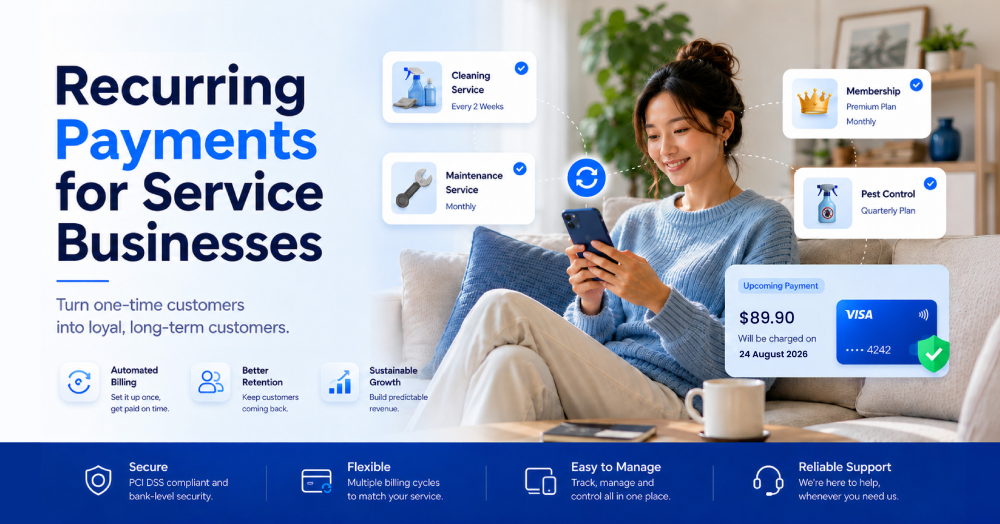
Recurring payments allow service businesses to collect authorised payments on an agreed schedule for ongoing services, memberships or subscription plans. With Fiuu Recurring Payments, businesses can automate recurring billing, tokenise card details for future charges and reduce the need for customers to complete a new payment every billing cycle.
Service businesses often rely on repeat work, but much of it is still unscheduled. Customers call when the house needs cleaning, the laptop needs support or the aircon is due for maintenance—usually only when the need becomes urgent.
That means every repeat visit may involve another quotation, booking, payment request and follow-up. For services that naturally recur, a recurring plan can make the relationship simpler for both the business and the customer.
Why Do One-Time Payments Limit Predictable Revenue?
The traditional service model is transactional: every job stands alone.
That works well for one-off services, but businesses offering regular cleaning, IT support, maintenance or similar services are often left waiting for customers to remember to book again.
Recurring plans offer another approach. Services can be packaged around weekly, monthly, quarterly or annual schedules, depending on what makes sense for the business.
| Service business | Recurring plan example |
| Cleaning services | Weekly or monthly cleaning plan |
| IT support | Monthly support package |
| Air-conditioning services | Quarterly maintenance plan |
| Equipment maintenance | Preventive maintenance contract |
| Education or tuition | Monthly tuition plan |
| Membership businesses | Monthly or annual membership |
The service itself may stay the same. What changes is how it is packaged, scheduled and billed.
Give Customers the Option to Subscribe
Customers are increasingly familiar with subscription-based purchasing. Subscription industry data cited by Swell, and attributed to Recharge, reports that approximately 32.4% of customers become subscribers when merchants offer a subscription option alongside one-time purchases.
While the figure comes from the broader e-commerce market rather than service businesses specifically, it highlights an important point: customers can only choose a recurring model when that option is available.
For businesses already serving the same customers repeatedly, offering a recurring plan can make repeat services easier to maintain while creating a more consistent billing relationship.
How Do Fiuu Recurring Payments Work?
Fiuu Recurring Payments helps businesses automate payment collection for recurring and subscription-based arrangements.
After a customer authorises the arrangement, subsequent payments can be processed according to the agreed billing schedule and applicable payment terms.
- Automated Billing Cycles
Recurring charges can be processed according to the amount and billing interval authorised by the customer, reducing the need for a separate payment each time. - Secure Payment Tokenisation
Card details can be tokenised during the initial authorised payment, allowing future eligible charges to be processed without asking customers to re-enter their card information. - Payment Notifications
Fiuu provides notifications for successful and unsuccessful recurring payment attempts, helping merchants monitor payment status and follow up when action is needed. - Flexible Billing Cycles
Recurring arrangements can support different billing cycles depending on the merchant's setup and applicable payment terms. A monthly IT-support package, quarterly maintenance plan and annual membership, for example, may each follow a different schedule.
What Other Options Exist for Regular Payment Collection?
Fiuu also provides Direct Debit solutions for businesses that need to collect regular payments.
Recurring card payments and Direct Debit are separate solutions, and their availability and requirements may vary depending on the merchant's market and setup.
Why Does Recurring Billing Matter?
Recurring billing can make repeat services easier to manage on both sides.
Businesses gain better visibility into expected payments and spend less time issuing individual payment requests, while customers can maintain ongoing services without repeating the same checkout process every billing cycle.
It also gives businesses more flexibility to package services into maintenance plans, support packages or memberships instead of selling every appointment separately.
Predictable Revenue Starts With Predictable Billing
For service businesses, recurring billing can turn an informal repeat-purchase pattern into a more structured process.
Rather than relying entirely on customers to remember when to return, businesses can offer an agreed service and payment schedule that is easier to maintain over time.
Sign up as a Fiuu Merchant at booster.fiuu.com or contact [email protected] to discuss the recurring payment setup that best fits your business.
Frequently Asked Questions
-
What Are Recurring Payments?
Recurring payments are payments collected according to an agreed billing schedule after the customer has authorised the arrangement. They are commonly used for subscriptions, memberships, maintenance plans and other ongoing services.
-
How Do Recurring Payments Work for Service Businesses?
Businesses can offer customers a recurring plan for services provided regularly. Once authorised, eligible payments can be collected according to the agreed schedule instead of requiring a new payment for every service period.
-
Can Businesses Offer Different Recurring Payment Plans?
Yes. Businesses can structure recurring arrangements around different billing cycles and service packages, depending on their merchant setup and applicable payment terms.
-
What Happens If a Recurring Payment Fails?
Fiuu provides notifications for successful and failed recurring payment attempts so merchants can follow up when needed. Because card details are tokenised, a follow-up charge can be attempted without asking the customer to re-enter the same payment information.
-
Do Customers Need to Enter Their Card Details Every Billing Cycle?
No. Card details can be tokenised during the initial authorised payment, allowing subsequent eligible recurring charges to be processed without requiring customers to re-enter them each time.
-
Are There Any Limits on How Long a Recurring Arrangement Can Run?
Recurring payment arrangements may be subject to specific terms, including a defined billing period or transaction intervals, depending on the payment method and setup. Businesses planning longer-term subscriptions or memberships should confirm the applicable requirements with Fiuu during onboarding.
-
Does Fiuu Support Direct Debit for Regular Payments?
Yes. Fiuu provides a separate Direct Debit solution for businesses that need to collect regular payments. Availability and requirements may vary by market and merchant setup.
-
Which Service Businesses Can Use Recurring Payments?
Recurring payments may suit businesses that provide regular or scheduled services, including cleaning, maintenance, IT support, education, memberships and other subscription-based services.
-
How Can a Business Start Accepting Recurring Payments With Fiuu?
Businesses can register as a Fiuu Merchant or contact Fiuu's sales team to discuss the most suitable recurring payment setup for their business.
Related Posts

















Your one-stop payment partner for business growth.
Sign Up
Comprehensive Payment Channels
Unlock over 110 major payment methods across Southeast Asia.

One Integration, One Platform
Enables business to accept local and cross-border payments in Southeast Asia.

Seamless, Easy, and Instant
Sign up with digital on-boarding and start accepting payment within minutes.